
An eight-year old boy was rescued from the accident site in West Midnapore on Friday.

A landslide in the Vikhroli suburb of Mumbai killed two people and injured two others after heavy rains caused soil and stones to collapse on a hut.

The Central Bureau of Investigation on Friday took into custody three railway personnel in connection with the June 2 Balasore train accident, making its first arrests in the case, officials said.
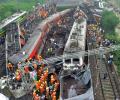
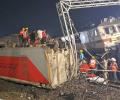
The train crash happened near the Bahanaga Baazar station in Balasore district, about 250 km south of Kolkata and 170 km north of Bhubaneswar, around 7 pm on Friday, prompting the Railway Ministry to order a probe.
Balasore district hospital looked like a war zone with the injured lying on stretchers in the corridor and rooms bursting at its seams with extra beds propped up.

The police lodged a suo motu case against unknown persons in connection with their involvement in the mishap, a police officer said.

Railway officials also indicated that possible 'sabotage' and tampering with the electronic interlocking system, which detects the presence of trains, led to the Friday accident.
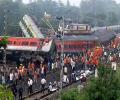
Preliminary investigations have revealed that a signal was given to Coromandel Express to enter the main line but it was taken off and the train entered the loop line, where it crashed into a goods train parked there.

An eyewitness said some people in a minibus and private cars were trapped.

The Indian Meteorological Department, meanwhile, warned of intense spell of 30 to 50 mm rainfall per hour with strong winds in Mumbai and suburban areas.

The South Central Railway as well as the East Coast Railway cancelled several trains while some were terminated midway, officials said, adding a few express trains were also diverted.
Ten trade unions with a combined membership of 15 crore workers in public and private sector, including banks and insurance companies, are on a nationwide strike to protest against changes in the labour laws.

Mumbai received 231.4 mm rain in the last 24 hours, while Thane received 229.81 mm.

The challenge is to convince productive sectors that a lower general rate would benefit all and remove the prevalent system of favours targeted towards narrow industry and service sector groups.
 © 2026 Rediff.com - Advertise with us - Disclaimer - Privacy Policy - Sitemap - Feedback - About us - Terms of use - Grievances